On a shaded forest floor, light may be scarce even when water is abundant. Higher in the canopy, light can be plentiful while access to water and mineral nutrients is unreliable. Forest plants face different combinations of constraints. Their forms and life histories reflect evolutionary histories rather than conscious solutions, and no strategy works equally well in every setting.
Living with shade, or avoiding it in time
Shade-tolerant plants can maintain themselves under relatively low light, often through combinations of leaf traits, respiration rates, longevity and allocation. These combinations vary among species. A broad leaf is not a universal marker of shade tolerance, and surviving in shade does not mean growing quickly there. A sudden opening can change the balance by increasing both available light and drying conditions.
Spring ephemerals use timing differently. In many temperate deciduous forests, plants such as trout lilies emerge and photosynthesize before the tree canopy fully develops. Stored resources support rapid seasonal growth. The opportunity is brief, and weather, browsing or shifts in canopy timing can affect success. A seasonal window is an ecological relationship between plant life cycles, not simply a preference for spring.
A plant without the usual green income
Ghost pipe, Monotropa uniflora, is a flowering plant that lacks the ordinary green appearance associated with photosynthesis. It obtains carbon through fungal partners rather than fixing its own carbon in the usual way. Those fungi can be associated with photosynthetic trees. This nutritional strategy is called mycoheterotrophy, and it occurs in several plant lineages.
The relationship is more specific than saying the plant “eats dead leaves.” Ghost pipe is not simply digesting litter like a decomposer. Its access to carbon depends on living biological partners. That dependence helps explain why removing it from a forest is unlikely to produce a successful garden specimen and can damage a local population. Observe it in place, without digging around its roots.
Orchids begin with a fungal dependency
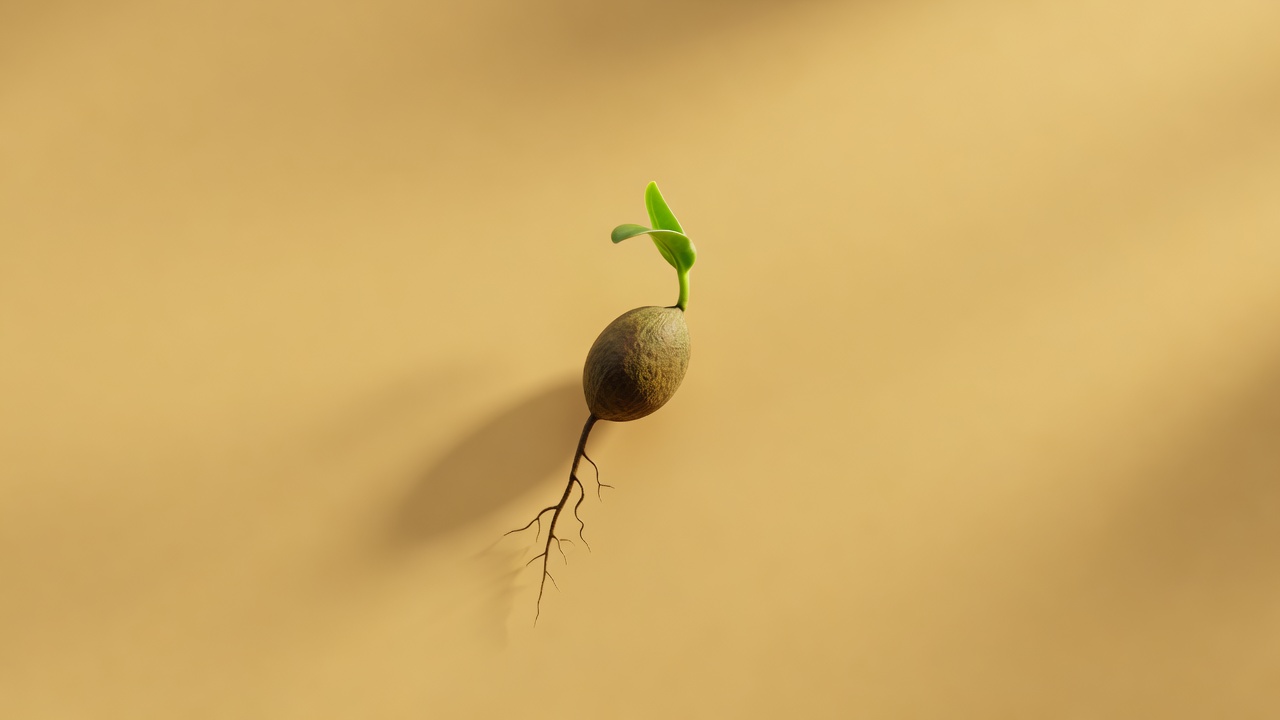
Orchid seeds are extremely small and generally have limited stored resources. In nature, germination typically depends on compatible fungi. Some orchids later photosynthesize while retaining fungal relationships; others obtain much or all of their carbon through fungi. The family therefore challenges the assumption that every flowering plant begins life as an independent green seedling.
Compatibility matters. The presence of a suitable-looking woodland does not guarantee that a particular orchid can establish there. Fungal partners, soil conditions, pollinators and disturbance history may all play roles. Conservation that focuses only on the visible adult plant can miss the relationships required for recruitment.
STRATEGY / TRADE-OFF
Persistence in low light can accompany slow growth and sensitivity to changed conditions.
Access to fungal carbon creates dependence on compatible partners and their habitats.
Greater light access can come with intermittent water and nutrient supply.
Using a tree without feeding on it
Epiphytes grow on other plants for support rather than rooting in the ground. Many orchids, bromeliads, ferns and mosses occupy this position in suitable forests. Being an epiphyte does not automatically mean being a parasite. Resources can come from rain, atmospheric inputs and accumulated organic material rather than from the host’s vascular tissues.
Some bromeliads retain water among their leaves, creating small habitats used by other organisms. Other epiphytes tolerate repeated drying. The canopy is not a uniformly comfortable address: exposure, branch stability and seasonal drought constrain survival. Lianas use another route upward, relying on support from other plants while maintaining a different growth form and set of competitive effects.
Dispersal changes the next encounter
A winged maple seed can move through air; a fleshy fruit may recruit an animal; some seeds are transported by ants attracted to attached food bodies. These structures influence the probability of reaching a suitable site, not a guaranteed destination. Dispersal may separate a seed from its parent while exposing it to new predators, competitors or unfavorable ground.
Botanical resources from the Royal Botanic Gardens, Kew, and its Plants of the World Online database help distinguish species and distributions. They complement ecological studies rather than replacing experiments on function. When interpreting an unusual trait, ask what evidence links form to performance. An appealing explanation is a hypothesis until observations and tests support it. The forest offers many workable strategies, each bounded by history, conditions and cost.